Skip to content

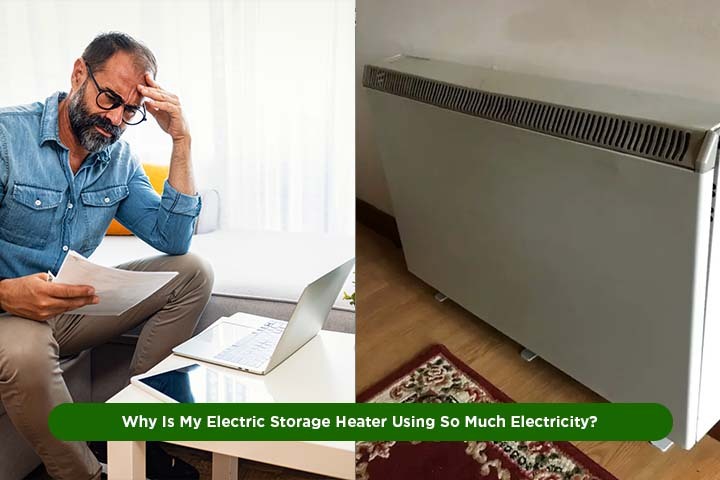
The electric storage heaters are specifically designed to consume less energy, and that too in off-peak hours. They retain heat for longer periods, resulting in low-energy bills. But if your system is still using electricity in peak hours or storing heat more than required, it might result in using too much energy.
This often leads to some error in the settings or way the household is using their high-retention electric storage heater.
We have compiled this article to help you understand how these systems work and how you can use them better for reduced energy bills.
How Does an Electric Storage Heater Work?
Your heater charges up during cheap off-peak hours, usually midnight to 7 am on an Economy 7 tariff. It stores heat in ceramic bricks. Then it releases that heat all day without using more electricity.
The whole point is to use cheap electricity at night, and expensive electricity is avoided during the day. When this system works properly, you win, and when it doesn’t, you’re most probably throwing money away.
Economy 7 vs. Standard Tariff:
| Tariff Type | Off-Peak Rate | Peak Rate | Storage Heater Benefit |
| Economy 7 | ~9p per kWh | ~30p per kWh | 70% cheaper charging |
| Standard | ~24p per kWh | ~24p per kWh | Zero advantage |
So why does your storage heater use so much electricity? Because something in this simple system has gone wrong.

Check your Eligibility Now
If you are receiving benefits from the UK Government then you might be eligible for free insulation grants.
Your Input Dial Might Be Set Too High
Your input dial controls how much heat your storage heater stores during those seven off-peak hours. If that’s set too high, you’re charging heat you don’t need. Set it too low? You run out of stored heat by evening and reach for that expensive boost function.
Here’s what you should actually do:
Seasonal Input Settings:
- Summer: Setting 1 or off
- Spring/Autumn: Settings 2-3
- Winter: Settings 4-6
A 2kW storage heater at full power uses 14 kWh per night. That’s £1.26 daily at 9p per kWh. Sounds reasonable, right? Now multiply that by every heater in your house. Got three of them? That’s £3.78 per day just for heating.
And if you’ve set them all to maximum when you only need medium? You’ve just wasted 30-40% of that cost.
The Immersion Heater Boost Can Destroy the Budget
Want to know the fastest way to blow £90 on your electricity bill? Use your immersion heater during peak hours.
Your electric storage heater comes with a boost function. An electric immersion heater that kicks in when you need extra warmth. Sounds helpful. It’s actually a trap.
Why? Because your immersion heater doesn’t care about your tariff. It uses electricity whenever you switch it on. Peak rate. Full price. Roughly 3kW of power at 30.5p per kWh.
Cost Comparison:
| Time Used | Rate | 2 Hours Cost |
| Off-peak (Economy 7) | 9p/kWh | £0.54 |
| Peak hours | 30.5p/kWh | £1.83 |
| Difference | — | £1.29 wasted |
Do that twice a day for a month? You’ve added £77 to your bill. And for what? Because you were too lazy to set your input dial correctly.
Set your immersion heater to timer mode. Let it only run during off-peak hours. Or better yet, charge enough heat overnight so you never need it.
You Might Not Have An Economy 7 Tarrif
Here’s something embarrassing: some of you don’t have an Economy 7 tariff. You’ve got storage heaters running on a standard tariff. Paying peak rates for everything.
That’s like buying a sports car and filling it with regular fuel. It defeats the entire point.
Check your electricity tariff right now. Are you on Economy 7? Economy 10? Or just standard pricing? If it’s standard, you’re paying 24p per kWh to charge your storage heater instead of 9p per kWh.
That difference? It means your 2kW storage heater costs £3.36 per night instead of £1.26. Nearly three times more. For the exact same heat.
What Economy 7 Actually Gives You:
- Seven hours of cheap electricity (typically midnight-7 am)
- 70% lower rates during charging
- Proper storage heating economics
Switch tariffs. Tomorrow. Not next month. The meter reading doesn’t wait for your convenience.
Your Home's Energy Efficiency Is Low
It is not possible, even for a perfectly set electric storage heater, to overcome terrible insulation. The heat escapes, your stored energy dissipates, and by 6 pm, you are cold again. Reaching for that expensive boost function.
Basic insulation improvements reduce storage heater electricity consumption by 15-20%. Seal your windows. Block the gaps under your doors. Insulate your loft. Not exactly the most exciting advice. But it works.
Think of it this way: your storage heater is like a bucket with holes in it. You can continue to pour in the expensive electricity. Or you can patch the holes.
When Your Thermostat Stops Doing Its Job
A faulty thermostat turns your storage heater into an electricity vampire. It charges all night. Every night. Regardless of how much heat is already stored.
How can you tell if the thermostat has given up the ghost? Your heater feels hot for the whole seven-hour charge window. The input dial doesn’t have an effect. Your electricity use is high, whatever settings you try.
Testing Your Thermostat:
- Should stop charging after 2-3 hours if set correctly
- Input dial changes should affect heat output
- Shouldn’t feel warm to the touch after charging completes
Modern Dimplex storage heaters have electronic controls. Older models? Mechanical thermostats that jam up with dust. Either way, a broken thermostat means wasted energy. Get it fixed or replaced.
The Wrong Size Heater Wastes Electricity Daily
Installing a 3kW storage heater in a small bedroom is idiotic. Yet people do it constantly. Oversized electric storage heater systems store more heat than you need. You either waste the extra energy or turn down the output so much that you get cold anyway. Next, you heat up using peak electricity. This cycle continues.
Heater Sizing Guide:
- Small rooms 1kW storage heater
- Medium spaces: 1.
- Large/open-plan: max.
Using a 3kW heater in a 10 square meter room? That’s wasted capacity every night. That’s not efficiency. That’s a waste.
Old Storage Heaters Are Energy Dinosaurs
Pre-2020 storage heaters cannot be compared when it comes to efficiency controllability. They charge at a constant rate of full capacity for eight hours and function in all conditions. There are no smart technologies involved.
The latest storage heaters carry a claim of 27% reduced operating costs. “High heat retention” versions are 22% more efficient.
What Your Storage Heater Should Actually Cost
A 2kW storage heater charging for seven off-peak hours uses 14 kWh per day. At 9p per kWh, that’s £1.26 daily. £459 per year.
Is yours costing £3-4 per day? Something’s wrong. £6 per day? You’re either running immersion heaters at peak times or you’ve got multiple oversized heaters on maximum settings.
Quick Cost Calculator: Power (kW) × 7 hours × 9p per kWh = Daily cost
Use that formula. Compare it to your actual bill. If the numbers don’t match, start investigating.
Final Thoughts
Your storage heater uses too much electricity because of bad settings, wrong tariffs, or user error. Not because the equipment is evil.
Lower your input dial for the season. Stop using your immersion heater during peak hours. Switch to Economy 7 if you haven’t already. Improve your insulation. Check your thermostat actually works.
Do those five things and watch your electricity usage drop 30-50%. It’s not complicated. It just requires you to actually manage your heating instead of ignoring it until the bill arrives.
Still paying £180 monthly? That’s on you now.
Frequently Asked Questions
Yes, but you’re misunderstanding what “on” means. Leaving the wall switch on doesn’t make your heater consume electricity constantly. It just keeps the timer active. Your storage heater only charges during off-peak hours, regardless of whether the switch stays on.
Three possibilities. One: you’ve got a bigger heater. A 3kW unit uses twice the electricity of a 1.5kW model. Two: your input dial is set higher. Three: you’re using your immersion heater during peak times, and they’re not. Check your heater’s rated power (printed on the unit), compare input settings, and verify when your boost function runs. The math doesn’t lie.
Only if your current thermostat is broken or you’re running ancient equipment from before 2010. Modern Dimplex storage heaters use 27% less energy through better insulation and smart controls. But if your problem is bad input settings, a £600 upgrade won’t fix stupidity..
At full input setting, 14 kWh per day (2kW × 7 hours). But your actual usage depends on your input dial. Set it to half? You use 7 kWh. Set it to minimum? Maybe 3-4 kWh. This is basic multiplication. Power rating × charging hours = daily kWh consumption. On Economy 7 at 9p per kWh, that 2kW heater costs £1.26 daily at full charge.
Economy 10 gives you three extra hours of cheap electricity, typically split into seven hours at night and three in the afternoon. It costs slightly more but reduces your need for peak-time immersion heater use. Worth it if your provider offers it and you regularly run out of stored heat by evening. Not available everywhere, though.
Probably yes. Either your input dial is too low for the weather, your output control is releasing heat too quickly during the day, or your home’s insulation is terrible. Start by increasing your input setting by one notch. If that doesn’t help, check for drafts and heat loss.
Get Your ECO4 Grant
Simply enter your postal code and answer a few questions, we’ll handle the rest!
Recent Blogs

Share Blog