Skip to main content Skip to content

There were an unparalleled number of installations by the people of the United Kingdom during the years 2025 and 2026, and there was more to it than simply increased electricity bills. There is far more to the benefits of modern technology now in terms of solar generation, storage, and off-the-grid power supply than ever before.
This guide walks through the core solar panel benefits for a UK home, where the real savings come from, and what’s worth knowing before choosing an installer.
Clean Electricity, Generated on Your Own Roof
Photovoltaic cells in solar panels harness daylight and use it to produce electricity, and this doesn’t necessarily have to be direct sunlight without clouds. There is enough daylight diffused in the UK climate, and the panels can generate from it, but not with the efficiency of producing electricity under bright sun.
Whereas ten years ago the average efficiency rate was about 15% for such panels, today solar panels used in the UK convert 20 to 23% of the daylight they receive into electricity.
Lower Bills Through Energy Savings
The most immediate benefit for most households is the effect on the electricity bill. A well-sized residential solar system can meet somewhere between 50 and 70% of a typical home’s annual electricity use.
Households with a 4kW system, the most common size for a three or four-bedroom home, typically save between £600 and £1,200 a year, with the higher end usually involving a battery. How much you save also depends on how much electricity you use during daylight hours, which is exactly what battery storage helps with.
Is Your Electric Bill Too Heavy on Your Budget?
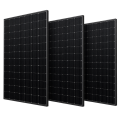
Stop paying full price for your bills when the power from the sun can save your money. A high efficiency solar PV system, built for UK weather, could save you up to £550 a year.
Solar Battery Storage: Using More of What You Generate
Without a battery, a typical home uses roughly half of what its solar panels generate, since a lot of that electricity arrives at midday while nobody’s home to use it. The rest gets exported to the grid for a fairly small return. Add a battery, and self-consumption often rises past 70%, since the system stores excess daytime generation and releases it in the evening when a household’s actual usage peaks.
Battery technology has moved on considerably too. Lithium iron phosphate batteries are now the standard choice for UK homes, and they’re safer and degrade more slowly than the older lithium chemistries used a few years ago. Pairing a battery with a hybrid inverter, which manages the panels, the battery, and the grid connection in one unit, has become the default setup for most new solar battery storage installations rather than something bolted on separately later.
Energy Independence and Getting Paid for What You Export
Solar and battery storage together give a household a real degree of energy independence: less exposure to grid price swings, and continued power to essential circuits during some outages, depending on how the system is set up. That independence has become one of the bigger draws for UK homeowners as electricity prices have stayed high and unpredictable.
For the electricity a system still exports, most suppliers pay through the Smart Export Guarantee (SEG), which pays homeowners for surplus electricity sent back to the grid, on top of whatever they’re already saving on their own bill. Rates and contract terms vary by supplier, so it’s worth comparing two or three before registering a new system.
Why Solar Technology Advantages Have Grown So Much
Panels, inverters, and batteries have all improved at once, and that combination is what actually makes solar power for homes practical today rather than a compromise.
Panels degrade more slowly than older models, typically losing under 1% of their output a year, and most now carry warranties of 25 to 30 years. Hybrid inverters handle solar, battery, and grid power through a single unit instead of three separate systems, and increasingly include monitoring that can flag a drop in performance before a homeowner would notice it themselves.
None of these changes are dramatic on their own. Together, they’re the reason a home solar installation in 2026 performs, and pays back, differently than one installed five or six years ago.
Common Concerns: Weather, Performance and Maintenance
UK weather is the concern that comes up most often, and it holds up less than people expect. Panels generate from daylight, not just direct sun, and technologies like half-cut cells are specifically designed to smooth out performance on overcast days and at low winter sun angles. Cooler temperatures actually help too, since panels lose some efficiency as they heat up, which is part of why the UK’s climate isn’t the obstacle it’s sometimes assumed to be.
Maintenance is minimal. Systems need little beyond an occasional clean, since heavy dirt or bird droppings can reduce output by 5 to 10% until removed, plus a periodic check on the inverter, which tends to be the component most likely to need attention over a system’s lifetime. On long-term value, a solar system can support a stronger EPC rating, which increasingly matters to buyers when a home eventually goes on the market.
Choosing Professional Solar Panel Installation Matters
The equipment matters, but so does the fit between its parts. A battery that doesn’t communicate properly with the inverter, or panels sized wrong for the inverter’s input range, can quietly cost a household a meaningful share of its expected output every year. That’s the argument for working with a properly certified installer rather than whoever offers the cheapest quote.
Look for MCS certification, since it’s what most suppliers require before registering a system for SEG payments, and ask how the installer handles compatibility between the panels, inverter, and battery, rather than assuming any combination will work together. A professional solar panel installation also protects the manufacturer warranties on each component, which matters far more over 25 years than it does on day one.
Solar has genuinely changed as a proposition for UK homes: better panels, smarter inverters, and batteries that make financial sense, on top of the savings and independence that first drew people to it. It also pairs naturally with other renewable energy upgrades, like an air source heat pump, for households thinking about their energy use more broadly. If you’re weighing it up for your own home, Berks Insulation can talk through what a system would realistically look like for your roof, usage, and budget.
Get Your ECO4 Grant
Simply enter your postal code and answer a few questions, we’ll handle the rest!
Recent Blogs


Share Blog